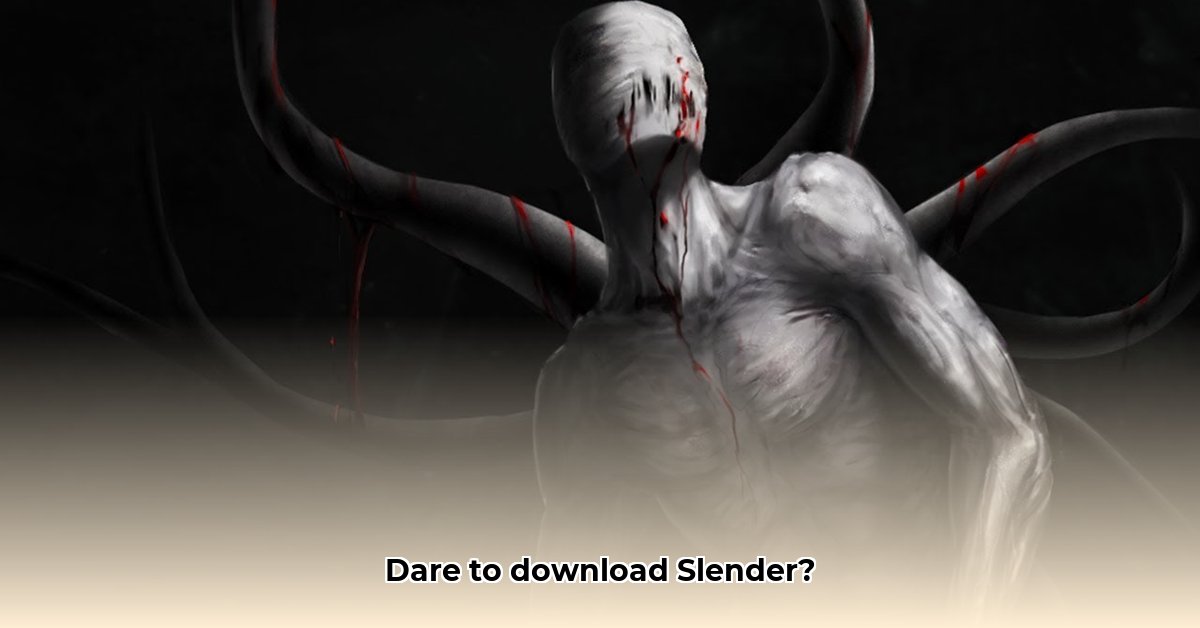
Forget jump scares and gratuitous gore. In 2012, a different kind of horror emerged, slithering from the internet's shadowy corners onto our screens. It began with a digital legend, the Slender Man creepypasta. This unnerving figure, tall and impossibly thin, with long, spindly arms and a disturbingly blank face, quickly enthralled millions. He wasn't your typical monster; his power lay in ambiguity, his chilling presence seeping into the collective unconscious. This digital specter would soon become a video game phenomenon.
From Online Legend to Indie Hit: The Genesis of Slender: The Eight Pages
The story of Slender: The Eight Pages is a testament to the power of a compelling idea and a passionate community. Mark Hadley and Eric "Blue" Knudsen didn't possess a sprawling studio or a multi-million dollar budget. They had a creepypasta and a shared vision. They distilled the Slender Man's unsettling aura into a game that prioritized chilling atmosphere over fancy graphics or complex plots. Their deceptively simple premise—find eight scattered pages in a creepy forest while evading the Slender Man—proved incredibly effective. The constant feeling of being watched, of something sinister lurking just beyond your peripheral vision, was far more terrifying than any direct confrontation.
Isn't it fascinating how a simple concept could achieve such widespread success? This speaks volumes about the importance of core gameplay mechanics.
Simple Gameplay, Maximum Frights: The Design of Terror
Imagine this: you're alone, navigating a bleak, grayscale forest. Your only tools are a compass and your dwindling sanity. Rustling leaves. A flickering screen. These subtle cues hinted at the Slender Man's unseen presence, building tension with every step. His sudden appearances weren't merely scary; they were shocking, jolting players from their cautious exploration. The game's low-resolution graphics, far from a weakness, enhanced the unsettling atmosphere, creating a sense of isolation and vulnerability. This minimalist approach perfectly captured the essence of the Slender Man mythos—the fear of the unknown, the dread of unseen horrors lurking in the shadows.
The game's success hinges on a question: Could such a simple game truly evoke such intense fear? The answer is a resounding yes.
A Viral Sensation: Community, Collaboration, and Continued Growth
The initial release of Slender: The Eight Pages wasn't a polished, feature-complete game. There was no pause button, no main menu – it was remarkably basic. Yet its chilling atmosphere was undeniable, instantly captivating players. Word spread like wildfire through online communities, transforming the game into a viral sensation. Remarkably, the game evolved organically. The developers actively incorporated player feedback, iteratively improving the game through updates. They added features, refined the experience, and forged a unique collaborative relationship with their community—a rarity in independent game development. This symbiotic relationship transformed Slender from a game into a collective artistic endeavor, shaped by the very players it was designed to terrify.
Did this community engagement contribute significantly to the game’s success? Absolutely. It's a prime example of the power of collaborative development.
A Lasting Impact: Slender's Legacy in Horror and Beyond
Slender: The Eight Pages wasn't merely a hit; it profoundly influenced the gaming landscape. It inspired countless imitations and established a new standard for psychological horror in video games. It spectacularly demonstrated that cutting-edge technology or a massive budget weren't prerequisites for creating a truly terrifying and memorable experience. Slender proved the power of a brilliantly executed idea, demonstrating how a smaller team, utilizing resourcefulness and strong community interaction, could create a globally recognized game. Its legacy continues to inspire independent developers and players alike.
How to Create a Low-Budget Horror Game Like Slender
The success of Slender: The Eight Pages lies in its effective design principles, executed on a shoestring budget. Here's how you can replicate its success:
- Prioritize Atmosphere Over Graphics: Focus on sound design, environmental storytelling, and lighting to establish a chilling mood. High-resolution textures aren't essential.
- Keep Mechanics Simple: Complex mechanics distract from the core horror. Slender's simplicity is its strength.
- Iterate and Engage Your Community: Early feedback is invaluable, allowing for design refinements and preventing costly mistakes.
- Leverage Free Assets: Utilize readily available free assets and tools, but be mindful of licensing.
By employing these strategies, you can craft a terrifyingly effective horror game without breaking the bank. The key is to prioritize intelligent design and community engagement.
⭐⭐⭐⭐☆ (4.8)
Download via Link 1
Download via Link 2
Last updated: Friday, May 16, 2025